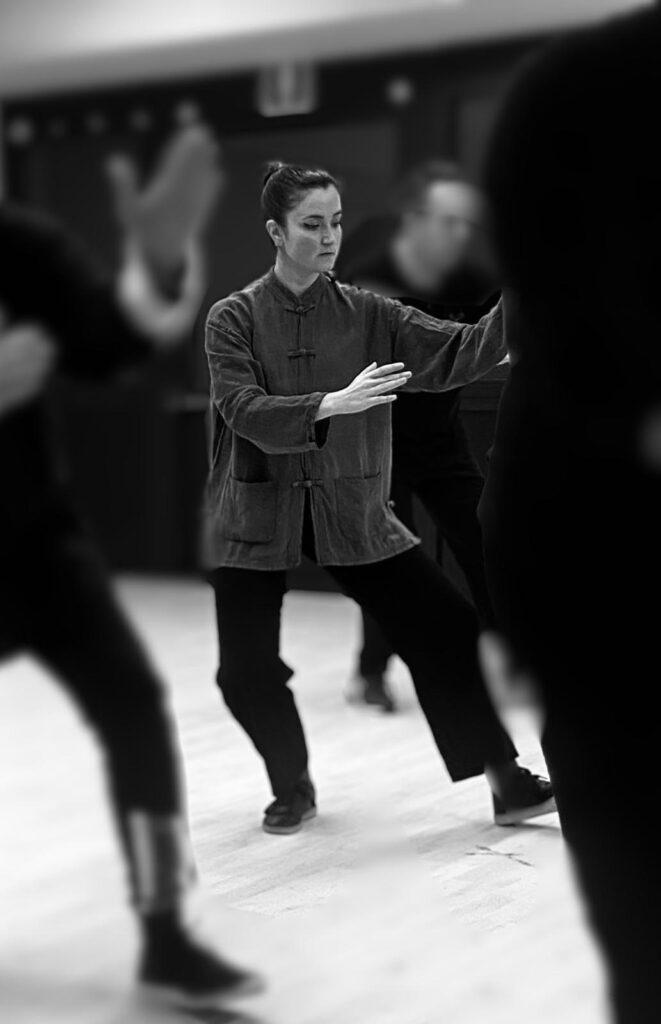
From Dott. Riccardo Borgacci
In short: what is it?
What is Tai Chi Ch’üan?
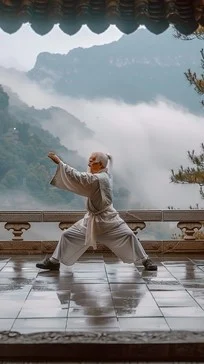
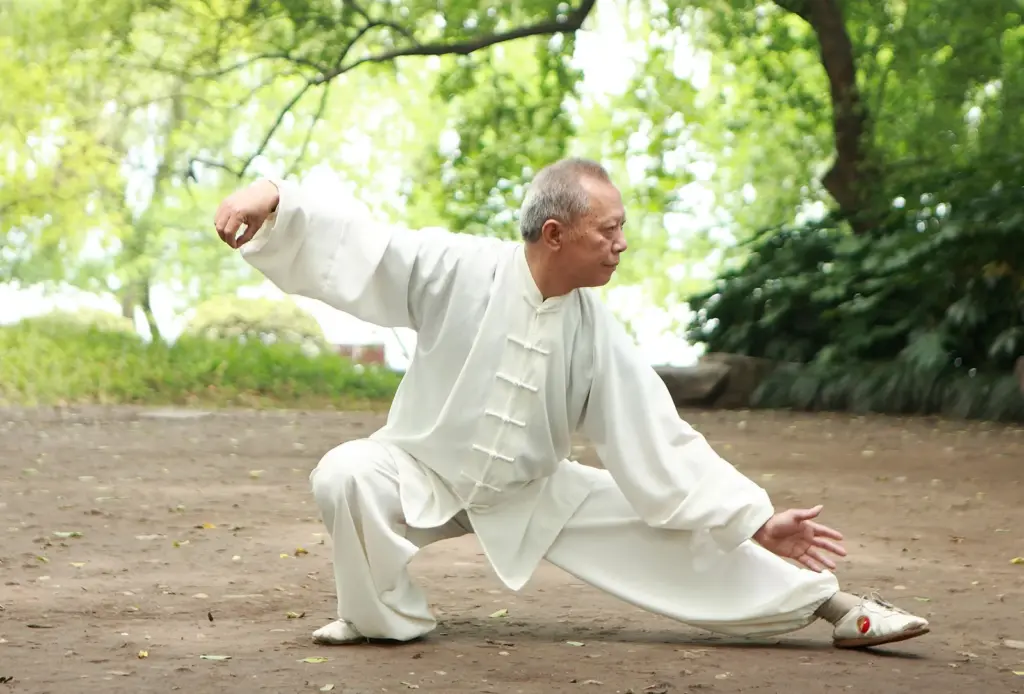
Tai Chi Ch’üan is an internal style of Chinese martial arts, born as a combat technique and now popularized primarily as a gentle and practical discipline geared toward wellness. In the West, it is often associated with preventative exercise, while scientific research has focused primarily on its effects on balance control, posture, and movement quality, with particular attention to the elderly population.
How the brain learns movement
To understand the benefits of Tai Chi, it’s helpful to consider how the brain builds and consolidates motor patterns. When learning a new movement, the nervous system integrates information from the senses, observation, and proprioceptors in muscles, tendons, and joints. Conscious repetition of the movement strengthens these circuits, improves motor memory, and makes execution more precise, fluid, and economical. Mirror neurons and the ability to perceive the body’s position in space also play an important role in this process.
Why Tai Chi Can Be Helpful
Many daily movements are performed automatically, without any real body awareness. As we age, inefficient or posturally incorrect motor patterns tend to consolidate and become more difficult to change. Tai Chi, by requiring slowness, attention, and control, helps re-educate movement, increase body awareness, and develop greater proprioceptive acuity. This is especially important in old age, when impaired balance is one of the main risk factors for falls.
Effects on balance, posture, and neuromuscular control
Tai Chi is based on continuous, slow, circular, and coordinated movements, combined with shifts in body weight, trunk rotations, and mental control of the movement. This combination intensely stimulates the neuromuscular system and strengthens body awareness. Precisely because of these characteristics, Tai Chi appears to offer interesting benefits for balance control and postural management, sometimes superior to those of more bioenergetic activities such as running, cycling, or swimming, at least when it comes to the proprioceptive component.
Main benefits and limitations of the evidence
Among the most cited benefits of Tai Chi are improved reaction time, proprioception, agility, flexibility, joint mobility, and, to some extent, muscle strength. Some studies suggest that older adults who practice it regularly may demonstrate better ankle and knee control and more stable balance compared to sedentary individuals. Its actual impact on fracture reduction remains more controversial, although its potential fall prevention effect continues to make it a practice of great interest. Furthermore, there are possible benefits to cardiorespiratory function, thanks in part to the synchronization of breathing and movement.
How is movement “designed” in the brain?
To understand why Tai Chi can be particularly useful in improving daily activities, especially in old age, we need to start with how the brain learns new motor patterns or modifies existing ones.
When a new movement is acquired, the nervous system analyzes it by breaking it down into minimal sequences and paying attention to the details of its execution. Neuroscience has shown how sensory information from the sense organs converges in the brain to build a complex and integrated representation of the movement. In this process, observing another person performing the movement can be particularly useful. This occurs thanks to so-called mirror neurons, nerve cells that facilitate the imitation of what is visually perceived. Their activation also occurs during practice repetition of the movement; if the execution is correct, the brain acquires the new motor pattern and tends to memorize it relatively quickly.
Information from joints, tendons, and muscles also contributes to consolidating motor memory. These structures contain proprioceptors, specialized receptors that inform the brain about the position of the body and its segments in space. Their role is central to motor control, as they allow us to build an internal perception of the body in motion. These are joined by exteroceptors, which transmit information from the external environment through sight, touch, hearing, smell, and the sense of balance, and interoceptors, which collect signals from within the body, including those related to tension in internal organs and pain.
All this information reaches the central nervous system, where it is processed to produce an immediate motor response directed at the muscles. When the system functions efficiently, the result is coordinated, precise, and energy-efficient movement. In the presence of trauma, such as a sprained ankle, the structures housing the proprioceptors can be damaged; As a result, the quality of signals sent to the central nervous system can decrease.
Effective consolidation of a new motor gesture, however, requires repetition over the following days. Only through practice does movement become more fluid, efficient, and precise.
Furthermore, the perception of reality is not the same for everyone. Some people predominantly use the visual channel, others the auditory channel, and still others the proprioceptive or kinesthetic channel. In Western culture, the dominant channel is usually the visual, followed by the auditory.
Kinesthetic channel: moving
Visual channel: seeing
Auditory channel: hearing
Proprioceptive channel: touching, feeling the body
Why practice Tai Chi?
In most cases, we don’t precisely perceive the difference between one position and another, or between a movement performed in one way and the same movement performed in a different way. For example, we often lack a clear awareness of the sensations produced by turning our head to the right or left, or of the position our body occupies in space.
Many everyday gestures, whether correct or incorrect, are performed automatically. This happens because the brain refers to pre-existing motor patterns. These patterns, acquired over the years, consciously or unconsciously, can become difficult to modify as we age, especially if they are inefficient or potentially harmful. In this context, Tai Chi can be a particularly useful tool.
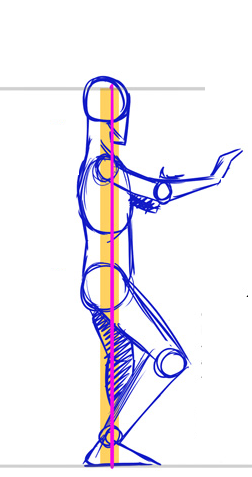
It would be helpful to learn to perceive, even with our eyes closed, stimuli from the external environment and to become aware of them. Even more important is to get used to feeling the body segment moving, to perceive its weight, temperature, and position in space. This self-awareness allows us to become aware of even the slightest changes occurring in the body.
Through improved proprioception and greater precision in neuromuscular control, which can be achieved through regular Tai Chi practice, postural balance can also improve. This is particularly important in the elderly, where impaired balance is one of the factors that contribute to falls.
Tai Chi, by requiring a careful and conscious analysis of each movement, allows us to address old motor patterns and build new ones. This process requires time, practice, and repetition.
Re-educating body posture, correcting unfavorable postural habits that worsen over time, and avoiding incorrectly performed repetitive movements is one of the main reasons why more and more people are turning to Tai Chi.
Mechanism of action of Tai Chi
Tai Chi involves slow, continuous, and progressive movements, transitioning from small to larger gestures, shifting body weight from side to side, and circular movements of the trunk and limbs, combining isometric and isotonic contractions. Mental control of the movement constantly and dynamically stimulates the ability to listen to the signals that reach the brain from the body.
The trajectories of the limbs, typically fluid and harmonious, develop in multiple directions and with varying amplitudes, while weight shifts and rotations of the torso complete the motor work. The postures and movements of the different body parts are controlled with a level of attention and concentration rarely found in other activities. This results in a marked enhancement of body awareness and, more generally, the interaction between the body and the mind.
For this reason, the proprioceptive training offered by Tai Chi, as well as that of disciplines such as yoga and gentle gymnastics, seems to show particularly interesting results in controlling the balance of the elderly population, sometimes superior to those observable with bioenergetic activities such as swimming, cycling or running.
Benefits of Tai Chi
Among the most obvious benefits associated with Tai Chi practice is improved active reaction capacity, that is, the rapid adaptation of the nervous and muscular systems to changes in stimuli. This aspect is sometimes improperly referred to as “reflex readiness,” but the physiological concept of reflex is much more specific and complex.
Do you know that…
From a physiological perspective, a reflex is an involuntary response to a stimulus. It can be nervous, endocrine, or neuroendocrine and is based on negative, positive, or feedforward feedback mechanisms.
In addition to this effect, improvements in proprioception—the ability to perceive the position of various body parts in space—and in the sense of balance and agility are observed. There are also muscular adaptations, in terms of strength and flexibility, and joint adaptations, with improved mobility, especially in individuals with stiffness or functional disorders. It should be noted, however, that these latter benefits can also be achieved through other motor skills.
In-depth analysis
To better understand the meaning of proprioception, a simple experiment may be helpful: with your eyes closed, try to identify the position of your legs, arms, and head. In a healthy, alert individual, this task is relatively simple thanks to proprioception. However, by maintaining the same position for at least a minute, you will gradually notice a reduction in postural perception accuracy, because in the absence of movement, the sense of position tends to diminish. Reopening your eyes allows your vision to compensate for the reduced information and more easily reestablish spatial orientation.
As early as 1837, Charles Bell, a Scottish surgeon, anatomist, neurologist, and philosopher, wrote:
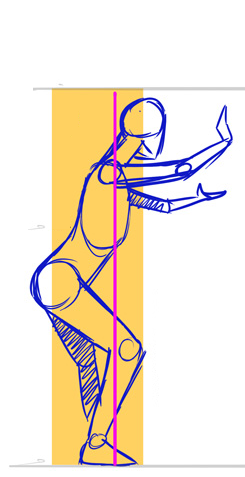
“How does a man maintain a straight or inclined posture against the wind that blows against him? It is evident that he possesses a sense by which he knows the inclination of his body and the ability to readjust and correct all his movements in relation to the vertical.”
All of these effects can be potentially useful at any age, but they take on particular value in the elderly population.
Some research has observed that older adults who regularly practice Tai Chi may demonstrate better ankle and knee proprioception compared to their sedentary peers, as well as better ankle kinesthetics compared to those who engage in other activities, such as swimming.
The potential practical result is more effective balance control; according to some authors, this could also help reduce the risk of accidental falls. This is of considerable interest, as fractures are one of the most significant complications in older adults, particularly those of the femur.
However, the actual extent to which Tai Chi can reduce the risk of fractures remains a matter of debate. Some studies conducted on large samples have not shown statistically significant differences compared to other forms of physical activity.
In addition to the effects on balance, Tai Chi practice appears to be associated with improved cardiorespiratory function, due both to training and to the synchronization between breathing and movement, which makes the exercise more economical. Favorable results may also emerge in flexibility and muscle strength tests.